
Pancakes - Crêpes
Mostly without sugar!
Which flour to use instead of wheat?
The different flours and their properties
Below is a list of gluten-free flours with each its own particular taste, texture and proprieties.
- Amaranth*: rich in proteins and amino acids; hazelnutty flavor, adds softness to biscuits, pancakes, and bread. Add ¼ - ½ cup to your mix.
- Sorghum: rich in proteins; provides humidity and sweetness as well as minerals and fibers; has nutty taste; good base for cakes, biscuits and pancakes. Add ⅓ to ½ cup to recipes. Can be replaced with starch, manioc, rice, almond, chickpea, coconut and buckwheat flour. Originates from Afrika but is now cultivated everywhere.
- Quinoa: rich in omega-3 and proteins; tastes like hazelnut; good base and binding for pastries and bread. Beware it absorbs liquids so replace traditional flour with half the quantity only. Make it yourself by grinding the quinoa grains. Add ⅓ cup to recipes.
- Millet : good source of magnesium et fibers; enhances the taste of pastries and biscuits but makes them dry. Add ¼ cup.
- Teff*: rich in proteins and minerals; it has a rich taste but also makes pastries dry. Add ¼ cup.
- Rice: light and slightly sweet; Base flour with a neutral taste. Good for bread, buns and cakes. Also binds and thickens creams/sauces. Beware this flour retains water so you must use half as much as usual. Add ⅓ - ½ cups. In whole grain rice flour the peel parts are also included.
- Buckwheat: a flowering plant that enriches the earth through its cultivation, it reduces toxic acidic waste in humans, balances the ph level being alkaline and increases energy! Makes pastries heavier; strong taste, bitter, enhances and stabilizes; good for crêpes, bread and chocolate cakes. Add ¼ - ½ cups.
- Chestnut*: rich in fibers and proteins; strong taste; will make excellent cakes. Add ¼ cup.
- Almond: makes pastries heavy, sweet, soft, juicy and fattier; provides texture, stabilizes, and enhances. Count 50 gr almond ≙ 100 g wheat flour. This flour absorbs water so you need add 10% more liquid. For rising pastries, replace only 1/4 of total flour.
- Chickpea : very rich in carbohydrates, fiber, and proteins yet low in fat; provides texture and airiness but beware it has a strong taste. Characteristic taste, good in carrot cake and soft gingerbread as well as in pie dough and veggie steaks. Becomes sticky when added to liquid, so needs to be mixed with other flour. Add ¼ cup.
- Coconut: gluten-free flour always used in addition to other flour; provides a very pleasant flavor to pancakes, muffins, brioche. Made from dried and ground pulp from the coconut. Contains over 40 percent dietary fiber but only about ten percent fat and is very different from other flours. It absorbs liquids so beware use only a little. Use in small amounts as a seasoning in pastries and to boost, for example, smoothies and porridge. Add ¼ cup.
- Manioc Tapioca: gluten-free flour used to give texture to pastries; silky and light, it will improve the elasticity of pastries and cookies and make them spongier and smoother. It does not contain any significant nutritional value and should not be the sole basic flour in a preparation. It is also recommended as a thickener in sauces and soups. Add ½ cup.
- Oatmeal: oats are a real nutritional hit. It binds liquid and is gel-forming. Good at binding liquid in bread and pastries. Good, mild nutty taste. Oats are naturally gluten-free but are handled in the same environment as gluten, so choose "pure oats" for gluten-free.
- Arrow-root starch : this starch is used to emulsify (make the mixture homogeneous) and thicken. Is a replacement for cornstarch.
- Corn starch (Maizena): commonly used in South and Central America for tortillas and tamales. Finely ground corn kernels. Good for bread, pancakes... Gives a yellow colour. Same as polenta but the latter is finer ground.
*These flours are either very expensive or difficult to procure.
Make your own gluten-free flour mix
- 50% - Structure: base flour (Sorghum, Tapioca, Quinoa or Rice)
- 25% - Texture: body or mass (Chestnut, Almond or Chickpea)
- 10% - Stabilizer: binding (Quinoa, Buckwheat, Oatmeal, Almond or Chickpea)
- 5 % - Emulsifier: softens the paste (Arrow-root)
- 5% - Thickener: provides volume (Maizena or Tapioca)
- 5 % - Enhancer: flavor and taste (Amaranth, Sorghum, Millet, Teff, Buckwheat, Almond, Chestnut)
Here is an example of flour mix for pastries and cakes :.
- 1 cup rice (150gr)
- 1 cup quinoa /sorghum (150gr)
- .2 cups tapioca (300gr)
- 1 cup chickpea (150gr)
- 1/2 cup millet (75gr)
Here is an example of flour mix for bread :.
- 1 cup (150 g) each of manioc & millet flour
- 1 and 1/4 cup (195 g) rice (also einkorn flour)
- ½ cup (75 g) sorghum (also almond...see list above)
- 1 tsp (5 ml) salt
- 1 tbsp (15 ml) xanthane or guar (also corn or arrowroot starch or eggwhites)
- ¼ cup (60 ml) xylitol***
- 2 eggs
- 2 egg whites
- 1 tbsp (15 ml) cider vinegar
- ½ cup (125 ml) olive oil
- 1 and 1⁄3 cup (325 ml) luke warm soja milk
- 1 tbsp (15 ml) dry yeast
Why use Xanthan Gum?
Xanthan gum works well in place of gluten (a protein found in wheat, rye, and barley that some people cannot tolerate). Xanthan gum helps trap the air bubbles created by leavening agents (baking soda, baking powder, yeast) to allow your breads and baked goods to rise. It helps thicken liquids, which is why it is often found in salad dressings and sauces. This thickening action helps hold gluten free baked goods together and keeps them from becoming too crumbly, making it a popular substitute to regular flour when making gluten free goodies.
What is Xantham gum?
It's a coating from a particular bacteria, Xanthomonas campestris which is bacteria that grows a protective coating. Think of it like an orange peel or the skin of an onion. It's a protective layer. When fed a particular food, this bacteria's coating becomes very sticky and makes a great binding and thickening agent in baking.
Most commonly, Xanthomonas campestris is fed glucose (sugar) derived from corn, soy, or wheat.
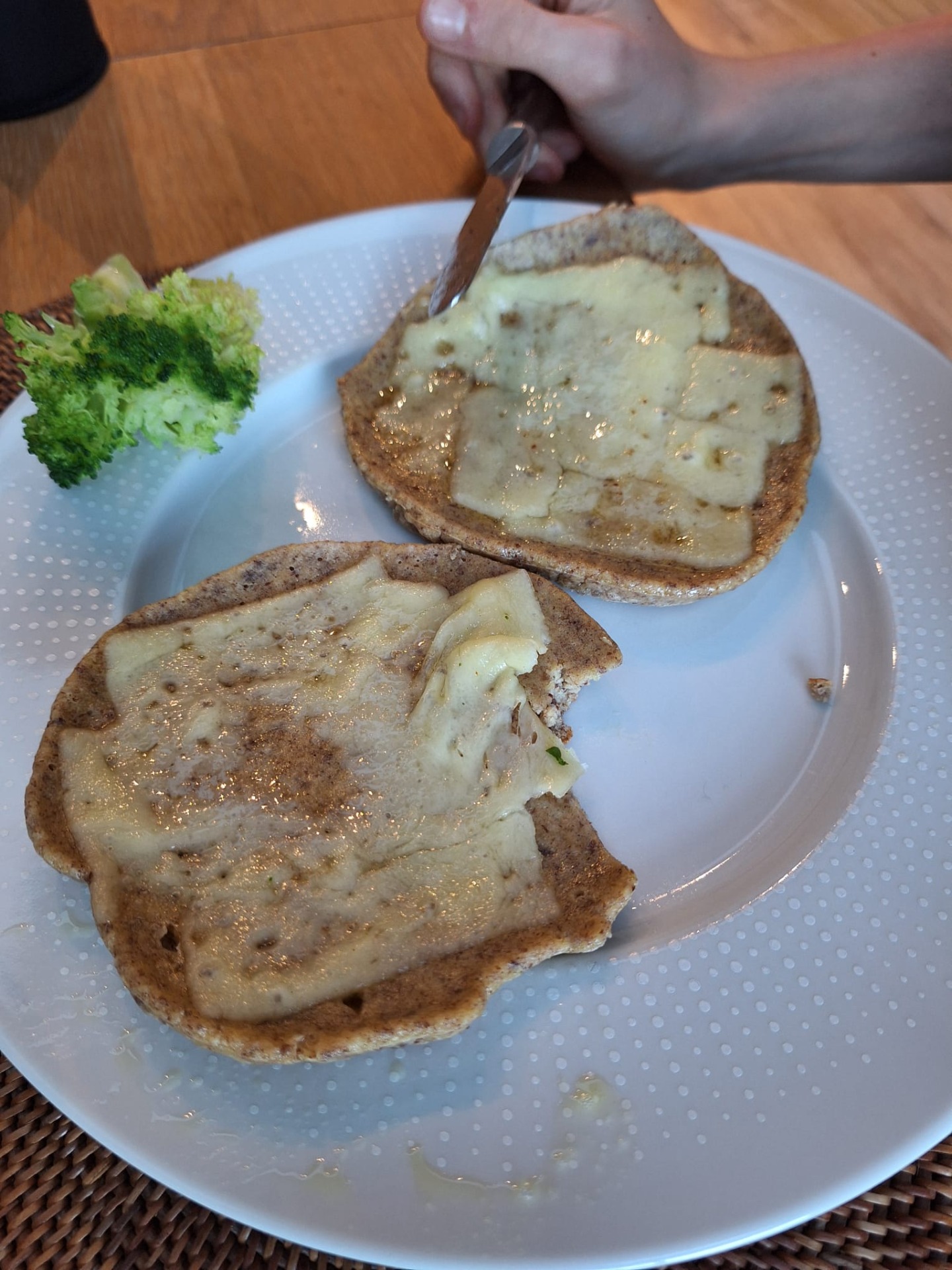
Healthy protein & fat rich pancakes
- 100 g nut flour (almonds or cashews)*
- 2 eggs
- Olive oil for frying
*Try mixing 10-20 g linseed flour with 80 g almond or cashez flour
Mix eggs + flour. If too lumpy, add some vegetable milk (1 tsp).
Fry on low heat.
Eat with melted cheese on top (+ vegetables !).

Waffles
Ingredients
- 1 cup rice flour
- ½ cup almond flour
- 1/4 cup each sorghum or tapioca & quinoa flour
- 2 tsp baking powder
- 1 tsp soda bicarbonate
- 2 tsp cinnamon
- 1 pinch salt
- ½ cup plant milk
- 2 eggs
- 3 tbsp syrup
- ½ cup olive oil (also works with coconut oil)
In two separate bowls, mix the dry ingredients with a fork and the liquids with an electric mixer.
Slowly add the dry-mix to the liquids and mix until smooth. Do not wait too long before making them for the paste will thicken. If it happens, add more milk.
Scoop into waffle iron and bake for 3-4 minutes.

Basic Gluten-free Crêpes
- 1 cup rice flour
- ¼ cup sorghum or buckwheat or more rice flour
- ¼ cup quinoa or almond
- ½ cup tapioca
- 3 tsp baking powder
- 2 tsp cinnamon
- 1 pinch salt
- ¼ cup coconut oil
- 2 cups plant milk
- 2 eggs
- 3 tbsp syrup
In two separate bowls, mix the dry ingredients with a fork and the liquids with an electric mixer.
Slowly add the dry-mix to the liquids and mix until smooth.

Buckwheat Beetroot Crêpes
- 240 ml (1 cup) beetroot juice
- 2 eggs
- 175 g (1 and 1/3 cup) buckwheat flour
- 1 tsp cumin
- 1/2 tsp salt
- 2 tbsp olive oil
- 90 ml (1/3 cup) water
Mix juice and eggs. Add flour, cumin, salt and add water slowly. Allow to stand 15 mn at room temperature. Fry in coconut oil 1 minute on the front, 30 seconds on the flip side.

Buckwheat Crêpes
- 500 g buckwheat flour
- 2 tbsp binding flour
- 2 eggs
- 1 tsp salt
- 1 liter cold water
- 25 cl cider or beer
- 3 tbsp oil
Mix flour and salt. Place eggs in a well in the center. Combine adding water slowly. Add the beer/cider. Cover and let stand over night in the fridge.
Fry 1 minute on one side, 20 seconds on the other.
Pancakes with eggs
Jennifer Heart Smith
- 200 g flour (einkorn or whole or a mix of rice and buckweat)
- 1 tbsp baking powder
- Salt
- 60 g sugar or agave
- 3-4 eggs
- 350 g milk, kéfir or ricotta or yogurt
Separate egg whites from yolks. Miw yolks with sugar and milk/yogurt. Add the flour, salt, baking powder. Mix well. Beat whites into foam. Fold into mixture.
Fry the usual way.
Martha Stewart Pancakes
https://www.marthastewart.com
Dry ingredients
- 1 1/2 cups rice flour
- 1/2 cup potato starch
- 2 Tbsp sugar
- 2 Tsp baking powder
- 1/2 Tsp each of baking soda & salt
- 1/4 tsp xantham gum
Wet ingredients
- 2 cups buttermilk (plant milk + 2 tbsp cider vinegar)
- 2 large eggs
- 2 tbsp (30 ml) unsalted butter or oil melted
Whisk together flour, potato starch, sugar, baking powder, baking soda, salt, and xantham gum until well combined. In a small saucepan, gently heat buttermilk over low until warm to the touch. Transfer to a large liquid-measuring cup; whisk in eggs and melted butter/oil. Make a well in center of flour mixture; stir in buttermilk mixture until lumpy and just combined (do not overmix). Let stand 10 minutes.
.Fry as usual.
Pancakes without eggs


Basic recipe
Always separate dry ingredients from wet ones. Then add the dry ingredients to the wet ingredients and mix until a batter forms; it doesn't need to be perfectly smooth. Stir in any mix-ins you are using. If you want the batter to be thinner, add in another tablespoon of milk. Do not overmix. Let stand a few minutes for all the ingredients to swell.
BUT don't let it stand too long for it will make them difficult to fry. And if the dough is still too sticky or thick, add more milk.
ANOTHER WAY to fry pancakes is to bake them all in one go in the oven. The cast-iron skillet makes for a pretty presentation, and you don't have to spend any time at the stove.
Chai-spiced buckwheat pancakes
https://besolfulliving.com/
- 1/2 cup dairy-free yogurt
- 1/2 cup plant milk
- 2 Tbsp syrup
- 1 cup buckwheat flour
- 1 Tbsp ground flax
- 1.5 – 2 Tsp chai spice*
- 1 Tsp baking powder
- 1/4 Tsp Himalayan salt
- Optional add-ins: chocolate chips, blueberries, or both!
In a large bowl, whisk together the yogurt, milk, and syrup until smooth. Next add in all of the dry ingredients and stir until well combined.
Heat your skillet/pan, add a little coconut oil. Then scoop about 1/4 cup's worth for each pancake. Best is to use an ice cream scooper as the batter is a little thicker than regular pancake batter.
Cook for 2-3 minutes, flip, and cook for another 2-3 minutes. Makes about 10 pancakes.
Top with maple syrup, jam, vegan butter, or nut butter! Enjoy!
*DIY CHAI SPICE:
- 2 Tsp each of ground cinnamon & ground ginger
- 1 Tsp cacao powder
- 1/2 Tsp ground cardamom
- 1/4 Tsp each of ground nutmeg, ground cloves & ground allspice
Mix all of the above together and store in either a spice bottle or glass jar. Before each use, give the bottle or jar a little shake (or stir) to make sure the spices get mixed up.
Bakerita Pancakes
https://bakerita.com/vegan-pancake-recipes/
- ½ cup almond milk, or dairy-free milk of choice
- ½ Tsp apple cider vinegar
- 1 ripe banana
- 2 Tbsp syrup
- 1 cup rolled oats (I mix oats beforehand to have oatmeal ready)
- 1 Tbsp (1 pack) baking powder
- ¼ Tsp cinnamon
- ⅛ Tsp sea salt
- ½ cup blueberries*
*NOTE: I don't recommend adding blueberries as it makes the pancakes stick to the pan.
In a small bowl, combine the milk and apple cider vinegar and let stand for 3 minutes.
In a blender, combine the oats, milk mixture, banana, syrup, baking powder, salt, and cinnamon. Blend for 30 seconds until the oats are broken down and smooth. Let the batter stand for 5 minutes to thicken up.
Once pan is hot, add a bit of coconut oil and then add 1/4 cup of batter to the pan. Press a small handful of blueberries into the batter*. Cook for 2 minutes or until the edges look cooked, before flipping gently, and cooking for another 1-2 minutes, or until golden brown.
Repeat until all of the batter is gone.
If saving for later, store wrapped in plastic wrap or an airtight container in the refrigerator. Reheat in the microwave for 15 to 30 seconds.
- Optional mix-ins
- 1/2 cup fresh or frozen blueberries (if using frozen, toss berries with 1 tablespoon flour first)*
- ⅓ cup mini chocolate chips
- Rum, flower blossom extract, orange or lemon zest, vanilla...
- 2 tsp cinnamon, ginger, vanilla...
*NOTE: I don't recommend to add any berries or chocolate as it makes the pancakes stick to the pan.
Lemon & Poppy seeds Pancakes
- ⅔ cup almond milk or dairy-free milk
- ⅓ cup fresh lemon juice & 1 Tbsp zest, from approx 2 lemons
- ½ cup unsweetened applesauce or 1 ripe banana
- ⅓ cup syrup
- 2 cups rolled oats (I mix oats beforehand to have oatmeal ready)
- 2 Tbsp (2 packs) baking powder
- ⅛ Tsp salt
- 2 Tbsp poppy seeds
In a blender, combine the milk, lemon juice & zest, oats, applesauce or banana, syrup, baking powder, and salt.
Blend for 30 seconds until the oats are broken down and smooth. Stir in the poppy seeds. Let the batter stand for 5 minutes to thicken up.
Once the pan is hot, add a bit of coconut oil and then add 1/4 cup of batter to the pan. Cook for 2 minutes or until the edges look cooked, before flipping gently, and cooking for another 1-2 minutes, or until golden brown.
Serve warm, with yogurt, lemon curd, maple syrup, fruit, and/or nut butter!
If saving for later, store wrapped in plastic wrap in the refrigerator. Reheat in the microwave for 15 to 30 seconds.
Ambitious Kitchen Pancakes
https://www.ambitiouskitchen.com/
Dry ingredients
- 1 cup flour mix
- 1 tbsp baking powder
- ¼ - 1/2 tsp salt
- 1 tablespoon flaxseed meal
Wet ingredients
- 1 cup buttermilk (plant milk+1 tbsp cider vinegar)
- 1-2 tbsp Agave syrup
- 2-3 tbsp melted coconut oil (or a neutral oil)
Note: *there are no eggs in this recipe, but consider adding some humidity (a few tablespoons water or milk) if the dough is too thick.
Simpler variation
- 175 g flour (try oatmeal instead)
- 20 g cornstarch (Maïzena)
- 1 tbsp sugar/sweetener
- 1 tbsp (1 pack) baking powder
- 1 pinch of salt
- 250 ml plant milk
- 2 tbsp oil
Same as before, mix dry ingredients separately, then add wet ones. Mix but don't over mix. Fry as usual.
Oat and Soja pancakes
- 2 ¼ cups (220 g) regular rolled oats, divided
- 225 g silken tofu
- 1 cup unsweetened almond milk
- 2 tablespoons pure agave syrup
- 1 tablespoon coconut oil, melted, plus more for cooking pancakes
- 2 teaspoons pure vanilla extract
- 2 teaspoons baking powder (1 pack)
- ½ teaspoon fine sea salt (or Kamal Nalak)
- 1 flaxegg
- 1 tbsp starch
Prepare flaxegg by mixing 1 tbsp flaxmeal with 50 ml warm water (3 tbsp). Put aside ½ cup oats. Blend the rest of oats (1¾ cup) and process until fine crumbs form, about 10 seconds. Add dry ingredients (baking powder, salt & starch), then the rest (tofu, flaxegg, milk, syrup, coconut oil, vanilla); process until smooth, stopping to scrape sides if needed. Stir in remaining ½ cup oats. Let batter stand to thicken, about 10 minutes.
Oat & Banana pancakes
- 2-3 medium ripe bananas (best when they have lots of brown spots)
- 2 flax eggs or 120g apple puree (6 tbsp) or 2tbsp water*
- 1/2 cup plant milk (3/4 cups)
- 1 tsp vanilla
- 1 ½ cups (150 g) rolled oats (2 cups)
- 2 tsp (1 pask) baking powder
- ½ tsp cinnamon (3/4 tsp)
- ¼ tsp salt
- 1 tbsp sweetener
I tried adding 1 tbsp cornstarch + 60 g puree. Also, they are easier to make in a waffle pan. But it makes only 5 waffles, maybe 8 pancakes.